Northern Circuit
Tanzania's most travelled safari route strings together the country's headline parks — endless plains, a crater full of game, and elephant-studded baobab country — all within a few hours' drive of one another.
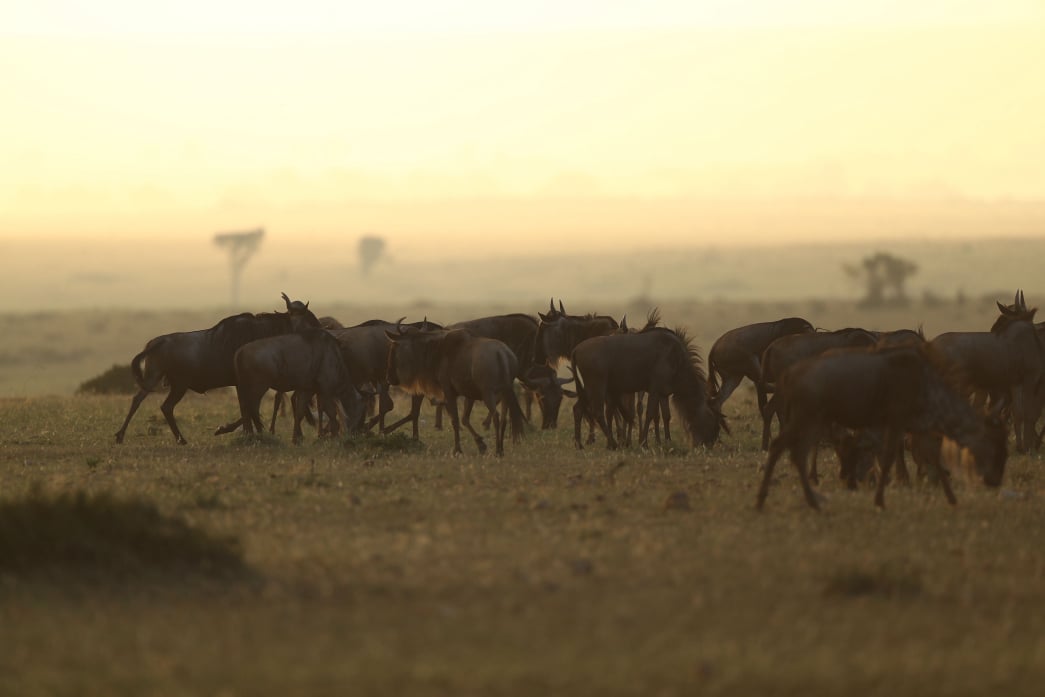 Iconic
Northern Tanzania, bordering the Maasai Mara
Endless open plains and the stage for the Great Migration, where over a million wildebeest and zebra move in an unbroken annual circuit chasing rain and fresh grass. The name comes from the Maasai word "siringet," meaning the place where the land runs on forever — and standing on the plains, it's easy to see why.
Beyond the migration, the Serengeti holds resident populations of lion, leopard, and cheetah year-round, along with some of Africa's best big-cat viewing thanks to the open terrain. The park is split into distinct zones — the southern short-grass plains, the central Seronera valley, and the western and northern corridors — each drawing different wildlife at different times of year.
Terrain ranges from short-grass savannah in the south to riverine woodland and kopjes (granite outcrops) further north, giving the park a surprising amount of visual variety for what looks, from the air, like flat grassland.
Camps and lodges range from mobile tented camps that follow the migration to permanent lodges in Seronera — Gilbays can match the style to your budget.
Central Seronera has resident game year-round, so it's a safe pick even outside migration season if your dates are fixed.
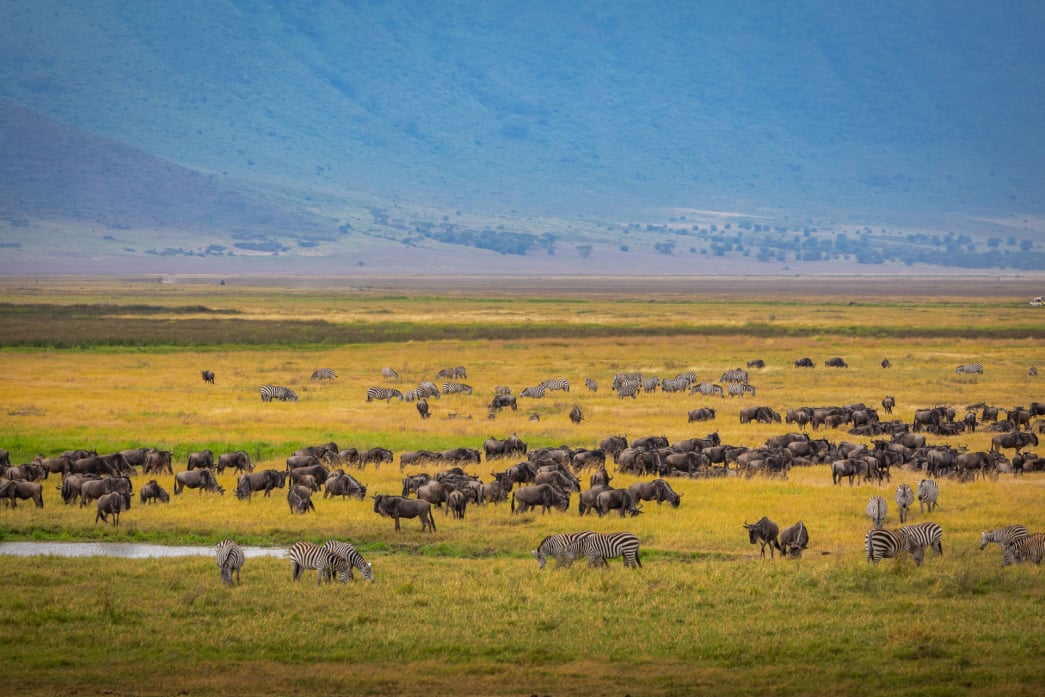 Big Five
Ngorongoro Conservation Area, southeast of the Serengeti
The world's largest intact, unfilled volcanic caldera, formed when a giant volcano collapsed on itself roughly two to three million years ago. Its steep 600-metre walls enclose a natural amphitheatre holding one of Africa's densest concentrations of wildlife, including the endangered black rhino.
Unlike much of the Serengeti, animals in the crater don't migrate — the permanent water and grazing mean lion, elephant, and buffalo can be found here in any month of the year. The crater floor is a patchwork of grassland, swamp, a soda lake, and acacia woodland, all visible from a single vantage point along the rim.
The Conservation Area surrounding the crater is also home to Maasai communities who still graze cattle within its boundaries, a rare example of people and wildlife sharing protected land.
Most travelers overnight on the crater rim for the views, then descend early for a full-day game drive on the floor.
The rim sits at nearly 1,800m and nights get cold — pack a warm layer even in the dry season.
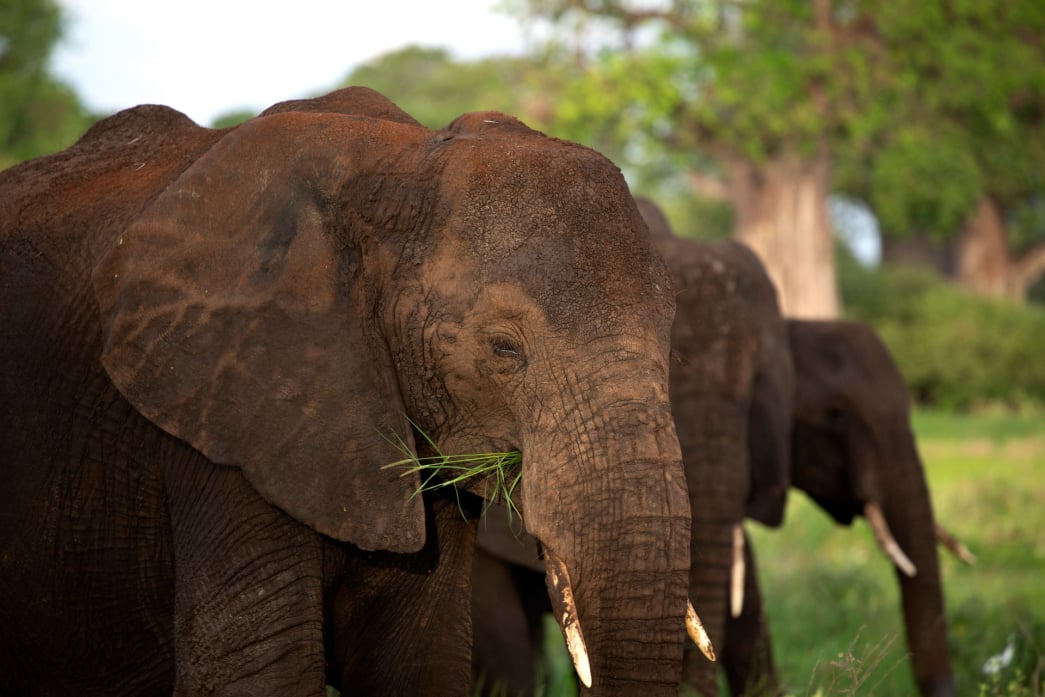 Elephants
South of Lake Manyara, on the road toward the Serengeti
Named for the Tarangire River, the park's only reliable water source through the dry season and a magnet for wildlife between June and October. Ancient baobabs, some estimated to be over a thousand years old, punctuate the golden grassland and give the park its distinctive silhouette.
Tarangire holds some of Tanzania's largest elephant herds — family groups of fifty or more aren't unusual along the riverbanks in the dry months. The park also sees far fewer vehicles than the Serengeti or Ngorongoro, making it a good option for travelers who want a quieter safari.
The landscape shifts from dense baobab woodland in the north to open swamp grassland in the south, which stays green and attracts wildlife even after the rains have moved on elsewhere.
Often used as a first or last stop on a northern circuit route, thanks to its short drive time from Arusha.
Elephant sightings are strong nearly all year, so it's a reliable choice even outside the June–October peak.
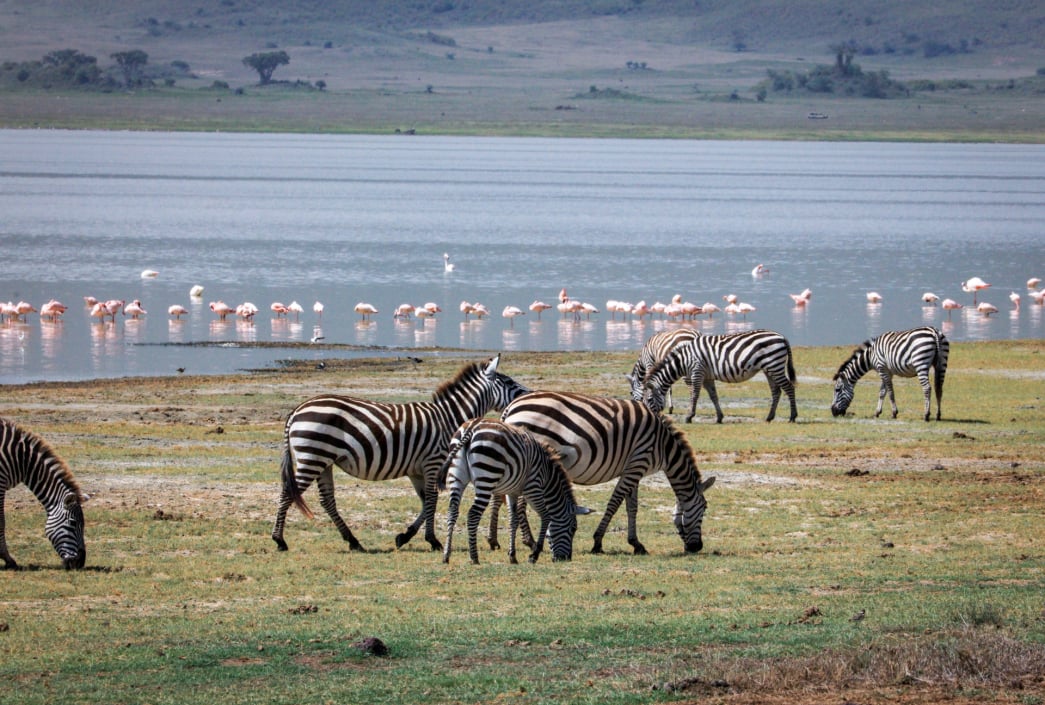 Birdlife
Base of the Great Rift Valley escarpment, near Mto wa Mbu
A compact park layered with groundwater forest, acacia woodland, and a shallow soda lake beneath the dramatic Rift Valley escarpment. The lake itself covers nearly two-thirds of the park's total area and draws thousands of flamingo along its shoreline when water levels are right.
Manyara is best known for its tree-climbing lions — a behaviour rarely seen elsewhere in East Africa — along with troops of baboon and dense concentrations of forest birdlife. Over 400 bird species have been recorded here, making it one of the top birding parks in the country.
Because the park is small, it's easy to cover in half a day, which makes it a popular stop en route between Arusha and the Serengeti rather than a standalone destination.
Most itineraries pass through on the way to or from the Serengeti rather than staying overnight.
Tree-climbing lions are a genuine highlight but not guaranteed on every visit — sightings depend on the day.
 Day Trip
Just outside Arusha town, beneath Mount Meru
Set beneath the slopes of Mount Meru, Tanzania's second-highest peak, this compact and often-overlooked park is one of the few in the country where walking safaris and canoeing are both permitted, offering a different pace and perspective from a standard game drive.
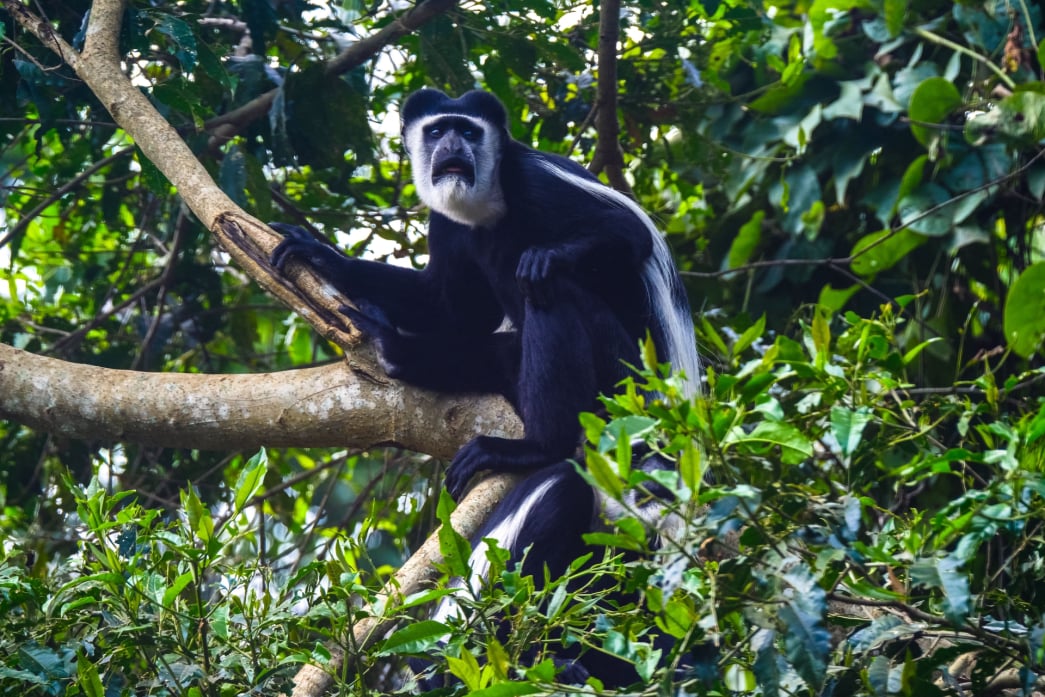
The Momella Lakes attract large flocks of flamingo and other waterbirds, while the park's forest and open glades hold healthy giraffe, buffalo, and colobus monkey populations. On clear mornings, Kilimanjaro is visible in the distance from the park's higher ground.
Its size and proximity to Arusha town make it easy to combine with an acclimatization day before a Kilimanjaro trek or as a half-day activity either side of a longer safari.
Usually done as a day trip from Arusha rather than an overnight stay.
A good pick for travelers with only a day or two before flying out, or as a warm-up before Kilimanjaro.
 Off The Beaten Path
Northern Tanzania, near the Kenyan border
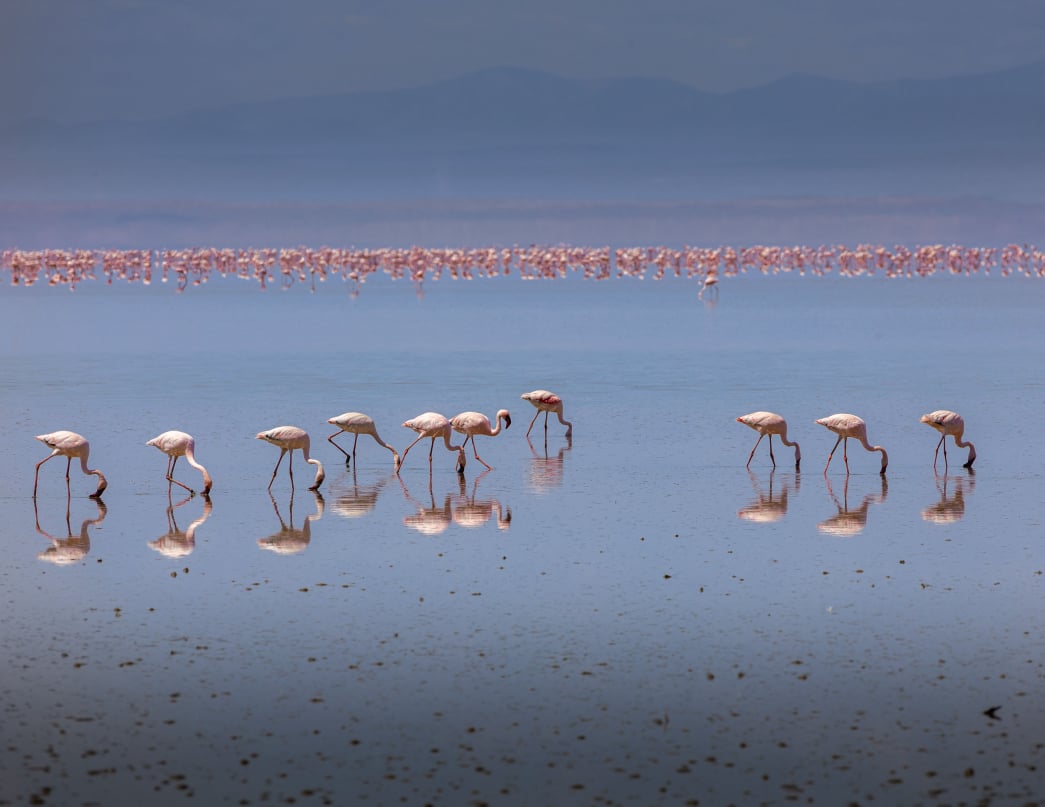
A remote, shallow alkaline lake beneath the active Ol Doinyo Lengai volcano — its name means "Mountain of God" in the Maasai language. The lake's high salinity and mineral content give its waters a striking red hue in places and make it inhospitable to most life, but it's a critical breeding ground for East Africa's lesser flamingo population.
Beyond the lake, the area is a base for guided Maasai cultural walks, hikes to nearby waterfalls, and — for the ambitious — a night climb of Ol Doinyo Lengai itself, timed to reach the summit for sunrise.
The landscape here is stark and volcanic rather than classic savannah, which makes it a striking add-on for travelers who've already covered the main parks and want something visually different.
Basic tented camps only — this is a rustic add-on rather than a luxury stop, and best suited to travelers who don't mind roughing it.
The Ol Doinyo Lengai night climb is strenuous and not for everyone — ask us about it before committing.

Africa Adventure — Southern Circuit Specialists
Based in Mikumi, Morogoro, Gilbays Safaris runs daily departures into Mikumi National Park alongside safaris and tours across Tanzania — from game drives to Maasai cultural excursions.